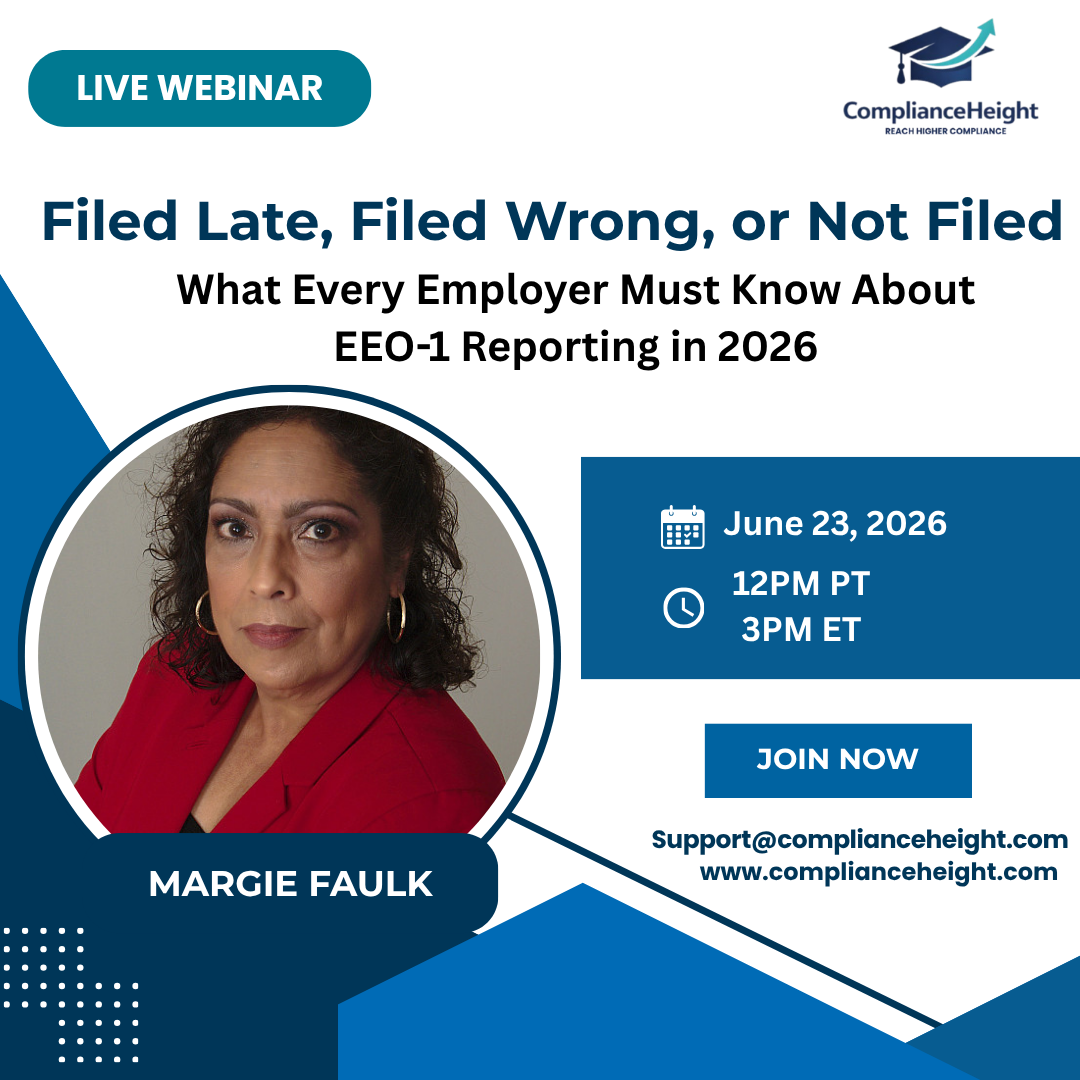
The EEO-1 report is one of the most misunderstood — and most consequential — compliance obligations in the HR calendar. Every year, private employers with 100 or more employees, and federal contractors with 50 or more employees and contracts of $50,000 or more, are legally required to file workforce demographic data with the Equal Employment Opportunity Commission.
The EEOC can issue subpoenas to compel filing and may refer non-compliant employers to the Department of Justice. Yet many employers still file late, file with errors, misclassify employees into incorrect job categories, or fail to collect the required demographic data in the first place — creating audit exposure, legal liability, and in some cases, costly litigation. In 2026, the stakes have never been higher, and the compliance landscape has never been more complex.
As of April 2026, the EEOC has not yet announced the official opening date for the 2025 EEO-1 Component 1 data collection — with the window expected to open sometime in spring or summer 2026, consistent with the 2024 reporting cycle that opened April 30, 2025, and closed June 24, 2025. Employers who are not prepared when the window opens face a compressed timeline of just 6 to 8 weeks to collect, categorize, verify, and submit accurate workforce demographic data across all locations and establishments.
Beyond the federal EEO-1, the reporting landscape has expanded dramatically. States have also added EEO-1 requirements similar to the EEO-1 requirements, but more stringent. This session will also explore state requirements, deadlines, data requirements, and filing penalties.
Critical EEO-1 Compliance Areas This Session Addresses:
- Who must file, filing thresholds, and what qualifies as a covered establishment in 2026
- The 10 EEOC job categories and 7 race/ethnicity classifications — how to classify correctly
- Federal EEO-1 vs. state pay data reporting — understanding overlapping obligations
- How to collect, verify, and store employee demographic data in compliance with privacy laws
- Consequences of late filing, errors, and non-compliance — EEOC enforcement and DOJ referrals
Session Highlights:
Attendees will gain practical, filing-ready knowledge across these seven critical areas:
- Who Must File — Thresholds, Covered Establishments & Multi-Location Rules
- The 2026 Filing Timeline — Snapshot Period, Filing Window & Deadlines
- The 10 Job Categories & 7 Race/Ethnicity Classifications — How to Classify Correctly
- State Pay Data Reporting — California, Illinois, Massachusetts & New York City
- Collecting, Storing & Protecting Employee Demographic Data
- Consequences of Non-Compliance — EEOC Enforcement & DOJ Referrals
- Building Your EEO-1 Compliance Action Plan for 2026
Why You Should Attend:
The EEO-1 filing window opens with little advance notice and closes in 6 to 8 weeks. Employers who are not prepared risk penalties, DOJ referrals, and reputational damage. Here is why every covered employer must attend this session before the 2026 window opens:
- The EEOC filing window for 2025 data is expected to open in spring 2026 — with only 6 to 8 weeks to file —
- The EEOC can issue subpoenas and refer non-filers to the Department of Justice —
- California’s mandatory pay data reporting penalties become enforceable in 2026 —
- Multi-state employers face overlapping deadlines, different data requirements, and multiple portals
Who Should Attend:
- All Employers with 100 or more employees
- Business Owners with almost 100 employees to prepare for the future
- Company Leadership
- Compliance professionals responsible for completing the EEO-1 report
- HR Professionals
- Payroll Administrators
- Professionals identified
- Managers/Supervisors